Learning Support Register
Supporting student learning at every step of the journey
Background
The learning support delivery model has collaboration and flexibility at its heart. The model brings early learning services, kōhanga reo, schools and kura together in clusters so they can share information and resources. The model also helps them work together to decide how to respond to need and who is best placed to provide support.
Some clusters have begun to combine school-level registers to create a picture of learning support needs through a cluster-level dashboard. This dashboard makes it easy for learning support teams to identify and deliver joined-up support.
However, this has meant that every cluster has gone through its own process to develop a register. These are usually spreadsheets or Google Sheets and require someone to manually create dashboards. It also means that data cannot be pulled together to provide a bigger picture of needs across a region.
The idea of a standardised learning support register came about so that clusters:
- don’t have to create their own register from scratch
- use a common language to describe learning support needs
- minimise security and privacy risks
- improve the quality of data across the education system at a school, cluster, regional and national level
Objective
Collaborate with educators from around New Zealand to co-design a standardised learning support register for documenting learning support needs and responses.
My Role
I was contracted by the Ministry of Education to embed with the Strategy and Innovation team as a UX designer and help design a standardised Learning Support Register for NZ educators.
The Approach
Discovery phase
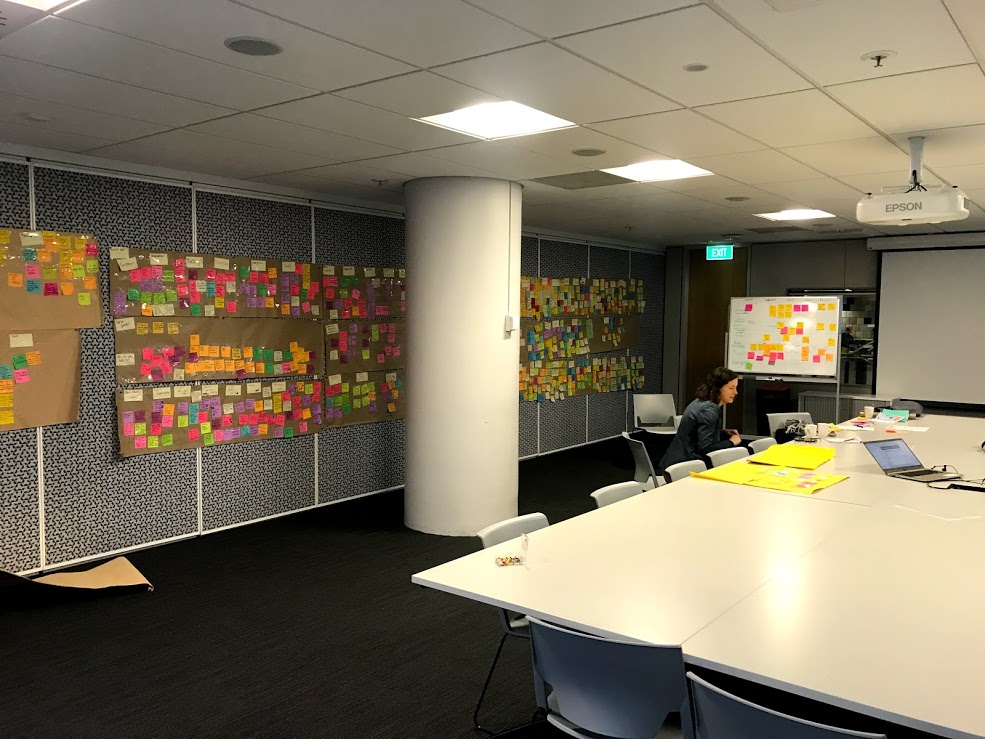
I talked to teachers throughout NZ at a series of co-design workshops to understand how learning support differs between each region. Using the data collected from the workshops, I was able to group tasks into common channels and establish a rough framework for which we could build on. As a team we further refined the framework to ensure it worked for all regions of New Zealand. I synthesised information from the workshops into a Google sheet document to share with the team and get feedback. Once the team was happy with the direction, I lay out a journey map, using feedback from the teachers.
Design phase
With the journey map as a starting point, educators were asked to list what they needed from a management software and how that would fit into the framework developed from the discovery workshops. I then summarised these findings and produced a design in Axure to test with educators.
Testing phase
I set up and led the team to conduct user testing for the initial prototype. This involved writing up a procedure and conversation guide for the team to follow. I attended each session as a note taker and mentored the group on user testing best-practice. To make it easier to talk about student learning, I modelled the data in the prototype on the Hogwarts School of Witchcraft and Wizardry. This let participants talk freely about the issues they face while keeping students’ names anonymous. We then reviewed the notes from each session and came up with a recommendation document for the 3rd party software vendor to model the software off.
Outcomes
The design recommendations document was submitted in September 2019 as a base to generate business requirements for the Standardised Learning Support Register. The software has been developed in a partnership between the Ministry of Education and a 3rd party vendor. Their development team embraced the intuitive nature of the designs and were able to roll them out quickly. The first cluster began using it in March 2020.
Things I Learnt
- Being comfortable not knowing all the answers and admitting that